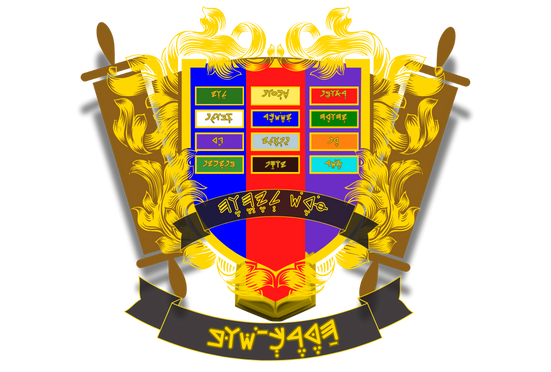
Israelite Alphabet (Yisreh'eyleeth Ehleph-Beyth): Difference between revisions
No edit summary |
|||
| Line 25: | Line 25: | ||
Phoenician (diverged)<br> | Phoenician (diverged)<br> | ||
Moabite<br> | Moabite<br> | ||
Ancient South Arabian | Ancient South Arabian<br /> | ||
</td></tr> | </td></tr> | ||
</table> | </table> | ||
</div> | </div> | ||
== Yisreh'eyleeth Ehlef Beyth (אֶלֶף־בֵּית יִּשְׂרְאֵלִית) == | |||
The '''Yisreh'eyleeth Ehlef Beyth''' (Yisra'elite Alphabet), also referred to simply as the '''Yisreh'eyleeth Letters''', is the ancient and true script of the people of Yisra'eyl. Unlike modern Hebrew alphabets that have adopted Aramaic and post-exilic forms and pronunciations, the Yisreh'eyleeth system restores the original names, sounds, and meanings of each letter according to their earliest known roots in Paleo-Hebrew, Proto-Sinaitic, and Semitic pictographic origins. | |||
This reconstructed alphabet is not just a set of phonetic symbols but a deeply meaningful collection of '''symbols of life, creation, covenant, and culture'''. Each letter conveys a unique identity and visual symbolism, tied to both '''linguistic''' and '''theological''' truths embedded in the lives and laws of Yisra'eyl. | |||
This reconstructed alphabet is not just a set of phonetic symbols but a deeply meaningful collection of | |||
These 29 letters—each with a precise pronunciation, historical pictograph origin, and meaning—form the foundation of Yisreh'eyleeth writing and pronunciation. The system includes both consonants and consonantal-vowels and is distinct from all other Semitic abjads due to its purity, consistency, and restoration to truth. | These 29 letters—each with a precise pronunciation, historical pictograph origin, and meaning—form the foundation of Yisreh'eyleeth writing and pronunciation. The system includes both consonants and consonantal-vowels and is distinct from all other Semitic abjads due to its purity, consistency, and restoration to truth. | ||
=== Purpose of Restoration === | === Purpose of Restoration === | ||
The modern "Hebrew" script is not the language of Yisra'eyl but of its captors. Aramaic influence, post-exilic reforms, and rabbinic traditions have corrupted both the spoken and written forms. The Yisreh'eyleeth | The modern "Hebrew" script is not the language of Yisra'eyl but of its captors and of those that have usurped them. Aramaic influence, post-exilic reforms, and rabbinic traditions have corrupted both the spoken and written forms. The Yisreh'eyleeth Ehlef Beyth corrects this by: | ||
* Returning to the | * Returning to the '''original letter names''', derived from their Proto-Sinaitic and Hebrew roots. | ||
* Restoring the | * Restoring the '''original phonemes''', including all gutturals, voiced and voiceless sounds. | ||
* Clarifying | * Clarifying '''true definitions''', based on ancient pictographic meanings rather than rabbinic speculation. | ||
* Removing inaccuracies like the use of "v" in "Vav" or modern soft-hard pairings that never existed in early Yisra'eyleeth usage. | * Removing inaccuracies like the use of "v" in "Vav" or modern soft-hard pairings that never existed in early Yisra'eyleeth usage. | ||
=== Letter Table === | === Letter Table === | ||
Below is a complete table of the 29 letters of the Yisreh'eyleeth | Below is a complete table of the 29 letters of the Yisreh'eyleeth Ehlef Beyth with their names in Hebrew, transliterations, correct phonetic values, and meaning based on early Hebrew understanding | ||
<div style="overflow-x:auto;"><table class="wikitable" style="width:100%; font-family: yisraeleet400;"> | <div style="overflow-x:auto;"><table class="wikitable" style="width:100%; font-family: yisraeleet400;"> | ||
| Line 54: | Line 52: | ||
<th>Modern Babylonian<br><span class="ashuri">(Ashuri)</span></th> | <th>Modern Babylonian<br><span class="ashuri">(Ashuri)</span></th> | ||
<th>Authentic Israelite Letter<br>(Yisreh'eyleeth)</th> | <th>Authentic Israelite Letter<br>(Yisreh'eyleeth)</th> | ||
<th>Name (Hebrew + Niqqud)</th> | <th>Name (Yisreh'eyleeth Hebrew + Niqqud)</th> | ||
<th>Transliteration of Name</th> | <th>Transliteration of Name</th> | ||
<th>Pronunciation</th> | <th>Pronunciation</th> | ||
| Line 61: | Line 59: | ||
<tr> | <tr> | ||
<td class="ashuri">א</td><td>א</td><td> | <td class="ashuri">א</td><td>א</td><td>אֶלֶף</td><td>Ehlef</td><td>Glottal stop or silent (vowel carrier)</td> | ||
<td>Ox, strength, leader – Deuteronomy 33:17</td> | <td>Ox, strength, leader – Deuteronomy 33:17</td> | ||
</tr> | </tr> | ||
| Line 192: | Line 190: | ||
Click any letter in the table above to visit its individual page. | Click any letter in the table above to visit its individual page. | ||
Revision as of 08:32, 26 March 2025
   Israelite Alphabet
אָלֶף־בֵּית יִּשְׂרְאֵלִית
| Script type | Restored Abjad (consonantal alphabet) |
| Writing direction | Right-to-left |
| Languages | Yisreh'eyleeth (Pre-Exilic Hebrew) |
| Time period | c. 1800 BCE – 586 BCE (original), Restored in present generation |
| Parent systems |
Proto-Sinaitic |
| Distinct from |
Aramaic Square Script (Ashuri) |
| Restored Features |
Original names, phonemes, pictographs, |
| Letter count | 29 |
| Sister systems |
Phoenician (diverged) |
Yisreh'eyleeth Ehlef Beyth (אֶלֶף־בֵּית יִּשְׂרְאֵלִית)
The Yisreh'eyleeth Ehlef Beyth (Yisra'elite Alphabet), also referred to simply as the Yisreh'eyleeth Letters, is the ancient and true script of the people of Yisra'eyl. Unlike modern Hebrew alphabets that have adopted Aramaic and post-exilic forms and pronunciations, the Yisreh'eyleeth system restores the original names, sounds, and meanings of each letter according to their earliest known roots in Paleo-Hebrew, Proto-Sinaitic, and Semitic pictographic origins.
This reconstructed alphabet is not just a set of phonetic symbols but a deeply meaningful collection of symbols of life, creation, covenant, and culture. Each letter conveys a unique identity and visual symbolism, tied to both linguistic and theological truths embedded in the lives and laws of Yisra'eyl.
These 29 letters—each with a precise pronunciation, historical pictograph origin, and meaning—form the foundation of Yisreh'eyleeth writing and pronunciation. The system includes both consonants and consonantal-vowels and is distinct from all other Semitic abjads due to its purity, consistency, and restoration to truth.
Purpose of Restoration
The modern "Hebrew" script is not the language of Yisra'eyl but of its captors and of those that have usurped them. Aramaic influence, post-exilic reforms, and rabbinic traditions have corrupted both the spoken and written forms. The Yisreh'eyleeth Ehlef Beyth corrects this by:
- Returning to the original letter names, derived from their Proto-Sinaitic and Hebrew roots.
- Restoring the original phonemes, including all gutturals, voiced and voiceless sounds.
- Clarifying true definitions, based on ancient pictographic meanings rather than rabbinic speculation.
- Removing inaccuracies like the use of "v" in "Vav" or modern soft-hard pairings that never existed in early Yisra'eyleeth usage.
Letter Table
Below is a complete table of the 29 letters of the Yisreh'eyleeth Ehlef Beyth with their names in Hebrew, transliterations, correct phonetic values, and meaning based on early Hebrew understanding
| Modern Babylonian (Ashuri) |
Authentic Israelite Letter (Yisreh'eyleeth) |
Name (Yisreh'eyleeth Hebrew + Niqqud) | Transliteration of Name | Pronunciation | Definition of Name (with Pre-Exilic Verse Reference) |
|---|---|---|---|---|---|
| א | א | אֶלֶף | Ehlef | Glottal stop or silent (vowel carrier) | Ox, strength, leader – Deuteronomy 33:17 |
| ב | בּ | בֵּית | Beyth | b as in boy | House, dwelling – Genesis 28:17 |
| ב | ב | בֵית | Veyth | v as in vine | House, dwelling – Judges 18:10 |
| ג | גּ | גָּמָל | Gah'mahl | g as in go | Camel, to lift or carry – Genesis 24:10 |
| ג | ג | גָמָל | Ghah'mahl | gh (voiced) | Camel, to lift or carry – Genesis 24:11 |
| ד | דּ | דֶּלֶת | Deleth | d as in door | Door – Genesis 19:6 |
| ד | ד | דֶלֶת | Dheleth | dh as in this | Door – Judges 19:27 |
| ה | ה | הֵא | Hey | h as in hat | Window, look, reveal – Genesis 26:8 |
| ו | ו | וָו | Waw | w as in water | Hook, peg, nail – Exodus 27:10 |
| ז | ז | זַן | Zan | z as in zebra | Weapon, nourishment – Genesis 9:3 |
| ח | ח | חוּץ | Khootz | kh as in loch | Fence, separation – Exodus 33:7 |
| ט | ט | טֶנֶא | Tehneh | t as in top | Basket, container – Deuteronomy 28:5 |
| י | י | יָד | Yahdh | y as in yes | Hand, work, deed – Exodus 4:4 |
| כ | כּ | כַּף | Kaf | k as in king | Palm, open hand – Exodus 29:23 |
| כ | כ | כָף | Khaf | kh as in Bach | Palm, open hand – Leviticus 14:15 |
| ל | ל | לָמֶד | Lah’medh | l as in lion | Goad, staff, authority – 1 Samuel 13:21 |
| מ | מ | מַיִם | Maieem | m as in mother | Water, chaos, flowing – Genesis 1:10 |
| נ | נ | נוּן | Noon | n as in net | Fish, seed, life – Exodus 1:7 |
| ס | ס | סְנֶה | Seneh | s as in sun | Thorn, support – Exodus 3:2 |
| ע | ע | עַיִן | Ghaieen | gh – deep throat | Eye, see, experience – Deuteronomy 11:7 |
| פ | פּ | פֵּא | Pey | p as in pen | Mouth, speech – Numbers 12:8 |
| פ | פ | פֵא | Fey | f as in phone | Mouth, speech – Deuteronomy 30:14 |
| צ | צ | צַד | Tsadh | ts as in cats | Side, righteousness – Exodus 26:20 |
| ק | ק | תְּקוּפָה | Teh’qufa | q as in quite | Circle, revolution – Exodus 34:22 |
| ר | ר | רֹאשׁ | Rosh | r (rolled) | Head, chief – Exodus 12:2 |
| ש | שׁ | שֵׁן | Sheyn | sh as in shine | Tooth, destroy – Judges 16:17 |
| ש | שׂ | שֵׂן | Seyn | s as in sand | Tooth, consume – Proverbs 30:14 |
| ת | תּ | תָּו | Taw | t as in time | Mark, sign – Exodus 12:13 |
| ת | ת | תָו | Thaw | th as in thin | Mark, sign – Genesis 4:15 |
How to Use This System
This system is designed for:
- Scholars, translators, and scribes of the Yisreh'eyleeth language
- Children of Yisra'eyl seeking to reclaim their linguistic heritage
- Developers of Yisreh'eyleeth educational tools, apps, or curricula
Each letter page provides a full breakdown of:
- Pictographic roots
- Historical evidence
- Etymology
- Grammatical function
- Usage in Tanakh with corrected pronunciation and examples
Click any letter in the table above to visit its individual page.