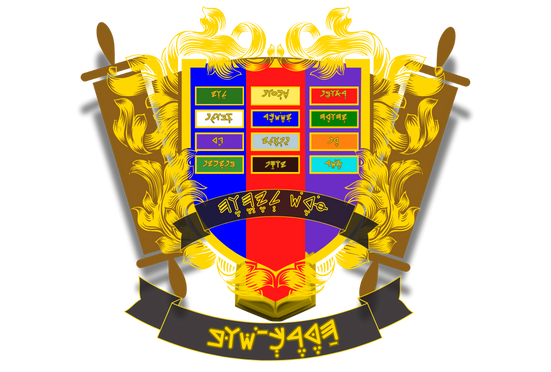
Protocols of Governance of The United Monarchy of Yisra'eyl
Article 1: General Provisions
Section 1.1 Supremacy of YEH'HEH'WEH
1.1.1 יֶהֱוֶה Yeh'ehweh, herein acknowledged as HaMMelekh Olam (The Sovereign of the Universe), is recognized as the supreme and ultimate authority over all nations on Earth. Accordingly, יֶהֱוֶה Yeh'ehweh has duly designated and established the United Monarchy of Yisra'eyl as the governing and regulatory authority over all nations, empowered to promote and implement global peace, prosperity, justice, and equitable judgement. The House of Daweedh is appointed as the designated facilitator of these objectives, charged with restoring adherence to the terms of the Covenant as delineated in the Torah delivered to Moshe. All statutes, governance frameworks, and judicial determinations shall be derived from, and in full conformity with, the Torah, alongside any directives issued by יֶהֱוֶה Yeh'ehweh to the Supreme Administrator (כֹּהֵן גָּדוֹל) or the King, both of whom shall serve as the ultimate and binding sources of legal authority.
Section 1.2 Structure of Government
1.2.1 The government of Yisra'eyl shall be divided into three main houses:
1.2.2 House of the Nazarite Levitical Administration (בֵּית הַנְּזִירִים הַכְּהֻנָּה הַלְּוִיָּת)
1.2.3 The Executive Offices of the Monarchy
1.2.4 The House of Judgment (Bayith Dan)
Section 1.3 Global Governing Body
1.3.1 The United Monarchy of Yisra'eyl is hereby constituted as a global governing entity, available to any territory or populace worldwide that elects to recognize and accept its authority. It shall serve as the sovereign government for any people who, through the principle of self-determination, elect it as their governing body.
Section 1.4 National and International Relations (see National and International Relations Act)
Diplomatic Relations
1.4.1 The Chamber of Foreign Affairs shall establish and maintain diplomatic relations with other nations and international organizations, promoting peace, cooperation, and mutual respect.
Trade and Commerce
1.4.2 The government shall negotiate and enter into trade agreements that benefit the economy and people of Yisra'eyl, ensuring fair and just trade practices.
Section 1.5 International Collaboration and Treaties (see International Collaboration Act)
International Collaboration
1.5.1 The Chamber of Foreign Affairs shall actively seek international collaboration to address global challenges, such as climate change, terrorism, and pandemics.
Treaties and Agreements
1.5.2 The government shall negotiate and enter into treaties and agreements with other nations and international organizations, ensuring they align with the interests and principles of the united monarchy of Yisra'eyl.
Section 1.6 Sovereign Wealth Fund
Establishment and Purpose
1.6.1 The government shall establish a Sovereign Wealth Fund (SWF) to manage and invest the kingdom's surplus revenues and natural resource wealth.
1.6.2 The purpose of the SWF shall be to ensure long-term financial stability, support economic development, and provide for future generations.
Management and Investment
1.6.3 The SWF shall be managed by a dedicated board of trustees appointed by the King, with expertise in finance, economics, and investment. The fund's investments shall be diversified across various asset classes to minimize risk and maximize returns.
1.6.4 Investment decisions shall be guided by principles of responsible and ethical investing, aligned with Torah values.
Transparency and Accountability
1.6.5 The SWF shall operate with full transparency and accountability, with regular reports on its performance and activities made available to the public.
1.6.6 The fund shall be subject to independent audits and oversight to ensure proper management and integrity.
Section 1.7 Digital Governance and Cybersecurity
Digital Infrastructure
1.7.1 The Chamber of Technology and Innovation shall oversee the development and maintenance of digital infrastructure to ensure secure and efficient online services for citizens.
Cybersecurity
1.7.2 The Chamber of Domestic Security, in collaboration with the Chamber of Technology and Innovation, shall develop and enforce cybersecurity policies to protect the kingdom’s digital assets and citizens’ data from cyber threats.
Digital Citizenship and E-Government
1.7.3 The government shall promote digital literacy and provide online platforms for citizens to access government services, participate in public consultations, and engage in the decision-making process.
Section 8: Economic Policies and Fiscal Responsibility (see Economic Policies and Fiscal Responsibility Act)
Economic Planning
1.8.1 The Chamber of Treasury, in collaboration with the Chamber of Commerce, shall develop long-term economic plans to ensure sustainable growth and stability.
Fiscal Responsibility
1.8.2 The government shall adhere to principles of fiscal responsibility, ensuring balanced budgets and prudent management of public finances.
Anti-Money Laundering
1.8.3 The government shall implement stringent anti-money laundering measures to prevent financial crimes and ensure the integrity of the financial system.
Section 9: International Aid and Humanitarian Assistance ( see International Aid and Humanitarian Assistance Act)
International Aid Programs
1.9.1 The Chamber of Foreign Affairs shall oversee international aid programs, providing assistance to countries in need and promoting global solidarity.
Humanitarian Assistance
1.9.2 The government shall develop and implement strategies for providing humanitarian assistance in response to crises, ensuring timely and effective aid to affected populations.
Section 10: Kingdom Currency
Establishment and Issuance
1.10.1 The government shall establish a national currency for the united monarchy of Yisra'eyl, to be used for all financial transactions within the kingdom.
1.10.2 The currency shall consist of serialized paper certificates and cryptocurrency backed by non-redeemable serialized precious metals held by the Treasury.
1.10.3 The Chamber of Treasury shall be responsible for the issuance and regulation of the national currency.
Currency Stability and Monetary Policy
1.10.4 The government shall implement monetary policies to ensure the stability and value of the national currency.
1.10.5 The Chamber of Treasury, in collaboration with the Office of Economic Advisers, shall oversee monetary policy decisions to control inflation, manage interest rates, and ensure economic stability.
Anti-Counterfeiting Measures
1.10.6 The government shall implement stringent anti-counterfeiting measures to protect the integrity of the national currency.
1.10.7 These measures shall include advanced security features on currency notes and coins, as well as strict penalties for counterfeiting. 1.10.8 The Chamber of Treasury shall develop and implement advanced cryptographic techniques to secure the national cryptocurrency and prevent fraudulent activities.
Precious Metals Backing
1.10.9 The national currency shall be backed by non-redeemable serialized precious metals, including but not limited to:
- Gold (זהב, Zahav)
- Silver (כסף, Kesef)
- Copper (נחושת, Nechoshet)
- Platinum (פלטינה, Platina)
- Palladium (פלדיום, Pladium)
- Rhodium (רודיום, Rodium)
- Ruthenium (רותניום, Ruthenium)
- Iridium (אירידיום, Iridium)
- Osmium (אוסמיום, Osmium)
- Nickel (ניקל, Nickel)
- Cobalt (קובלט, Kobalt)
- Tin (בדיל, Badil)
- Zinc (אבץ, Avatz)
- Lead (עופרת, Oferet)
- Aluminum (אלומיניום, Aluminyum)
1.10.11 The denominations of the currency shall correspond to the weights and values of these precious metals:
- Geyrah (גֵּרָה): 0.571 grams
- Bekah (בֶּקַע): 11.4 grams
- Shekel (שֶׁקֶל): 22.8 grams
- Half-Shekel (חֲצִי שֶׁקֶל): 11.4 grams of silver
- Peem (פִּים): 7.6 grams
- Mah'neh (מָנֶה): 570 grams
- Kikar (כִּכָּר): 34,200 grams
Transparency and Reporting
1.10.12 The Chamber of Treasury shall maintain transparent records of all precious metals held and the issuance of serialized paper certificates and cryptocurrency. 46.5.1 Regular audits shall be conducted to ensure the integrity and accuracy of the records and the backing of the national currency.
1.10.13 Management of Destroyed Certificates and Notes
Notification and Verification Process
1.10.14 If a note is destroyed, lost, or otherwise rendered invalid, the holder must notify the Chamber of Treasury immediately.
1.10.15 The Chamber of Treasury shall verify the claim through a detailed verification process, which includes confirming the identity of the note holder and the circumstances of the destruction.
Serial Number and Generation Tracking
1.10.15 Each note shall have an embedded RFID tag that shares the same serial number as the metal that backs it, with an additional generation number to differentiate it from prior notes.
1.10.16 A secure and immutable ledger shall be maintained to track the status of each RFID-tagged note, including issuance, destruction, generation, and replacement.
Replacement of Destroyed Notes
1.10.17 Upon verification of the destruction of a note, the Chamber of Treasury shall issue a replacement note with the same serial number and a new generation number.
1.10.18 The replacement process shall include:
1.10.18.1 Recording the destruction event in the ledger.
1.10.18.2 Issuing a new note with the same serial number and a new generation number.
1.10.18.3 Ensuring the backing metal remains allocated to the new note.
Handling Unverified Claims
1.10.19 If a claim cannot be verified, the corresponding metal shall remain in the Treasury’s reserve, marked with its serial number as unclaimed.
1.10.20 An unverified claim shall be subject to periodic review to prevent fraud and ensure accurate accounting.
Audit and Transparency
1.10.21 Regular audits shall include checks for destroyed, lost, or replaced notes to ensure the integrity of the system.
1.10.22 Reports on the status of destroyed notes and their replacements shall be included in public financial statements to maintain transparency.
Contingency Planning
1.10.23 The Chamber of Treasury shall develop contingency plans to handle large-scale destruction events (e.g., natural disasters) that might affect multiple notes.
1.10.24 These plans shall include rapid verification and replacement processes to minimize economic disruption.
Fraud Prevention Measures
1.10.25 Advanced security measures shall be implemented to detect and prevent fraudulent claims of note destruction.
1.10.26 Continuous monitoring and updating of security protocols shall be conducted to address emerging threats.
Education and Public Awareness
1.10.27 The Chamber of Treasury shall conduct public awareness campaigns to educate holders on the proper handling of notes and the steps to take if a note is destroyed or lost.
1.10.28 Clear instructions and support services shall be provided to assist holders in the verification and replacement process.
Holder Responsibilities
1.10.29 Note holders shall be informed of their responsibilities to report destroyed or lost notes promptly.
1.10.30 Holders shall also be educated on secure storage practices to minimize the risk of note damage or loss.
RFID-Enabled Notes
1.10.31 Each currency note shall be embedded with an RFID tag containing a unique serial number and generation identifier.
1.10.32 The RFID tag shall be used to authenticate the note, track its issuance and ownership, and verify its validity.
Mobile Application for Verification and Transfer
1.10.33 A secure mobile application shall be developed to allow merchants and citizens to read the RFID tags on currency notes.
1.10.34 The application shall verify the authenticity of the note by checking the serial number and generation identifier against the blockchain ledger.
1.10.35 The application shall log the transfer of ownership of the notes to the new owner’s profile on the blockchain while maintaining the privacy of transaction details.
Blockchain Integration
1.10.36 The blockchain shall maintain an immutable record of each note’s issuance, ownership transfers, and status changes.
1.10.37 Privacy-preserving techniques shall be employed to ensure that the contents of transactions are not disclosed, only the transfer of ownership.
1.10.38 The blockchain ledger shall be accessible to authorized entities for auditing and verification purposes.
Transparency and Reporting
Regular Audits
1.10.39 Independent audits shall be conducted at least annually to verify the reserves, issuance, and tracking of currency notes.
1.10.40 Audit reports shall be made publicly available to ensure transparency and accountability.
Public Reporting
1.10.41 The Chamber of Treasury shall publish regular reports on the status of precious metal reserves, currency issuance, and market value adjustments.
1.10.42 Public access to financial statements and audit reports shall be provided to maintain trust in the monetary system.
Article 2: The House of Law
Section 2.1: Composition and Authority
2.1.1 The House of Law is responsible for the legislative functions of the government, ensuring all laws and regulations are derived from the Torah.
2.1.2 The House of Law shall be composed of representatives appointed based on their knowledge of Torah and legal expertise.
Section 2.2: Supreme Administrator
2.2.1 The Supreme Administrator (כֹּהֵן גָּדוֹל) shall lead the House of Law, overseeing the legislative process and ensuring adherence to Torah principles.
Section 2.3: Legislative Assembly
2.3.1 The Legislative Assembly shall consist of representatives appointed based on their knowledge of Torah and legal expertise.
2.3.2 The assembly shall include the following committees:
2.3.2.1 Torah Law Committee: Responsible for interpreting and proposing Torah-based laws.
2.3.2.2 Legal Codification Committee: Responsible for codifying laws into a comprehensive legal code.
Section 2.4: House of the Nazarite Levitical Administration (בֵּית הַנְּזִירִים הַכְּהֻנָּה הַלְּוִיָּת)
2.4.1 The House of the Nazarite Levitical Administration is established as a specialized body within the House of Law, responsible for performing the duties commanded of the Levitical administrators as outlined in the Torah. This institution is crucial in preserving the sanctity and integrity of the legislative process by ensuring all laws align with the statutes provided in the Torah.
2.4.2 The House of the Nazarite Levitical Administration operates under the supervision of the Supreme Administrator (כֹּהֵן גָּדוֹל).
2.4.3 It serves as an interim administration until the children of Levi are identified.
2.4.4 Both Nazarites by vow and those born Nazarites act as administrators in the stead of the Levitical administrators. Nazarites by vow may serve to establish the Nazarite Levitical Administration. Once the Nazarite Levitical Administration and the tent of meeting have been anointed with the holy anointing oil and they've become messiahs, and there is a sufficient number of born Nazarites to optimally administer the Nazarite Levitical Administration, those Nazarites by vow must complete and pay their vows. Only a born Nazarite may serve as the Supreme Administrator. This office will follow the paternal bloodline of that Nazarite by birth as the interim Supreme Administrator until a suitable Levite is found, anointed as such by the Supreme Administrator, and chosen by the King or by YAH's verified command.
2.4.4.1. Only the children of Yisra'eyl may serve as Levitical Administrators in the House of the Nazarite Levitical Administration
2.4.5 Types of Nazarites:
2.4.5.1 There are two main types of Nazarites mentioned in the Torah:
2.4.5.1.1 Nazarites by Vow: Individuals who voluntarily take the Nazarite vow for a specific period or for their entire life, abstaining from wine and other products of the vine, not cutting their hair, and avoiding contact with dead bodies.
2.4.5.1.2 Born Nazarites (שָׁאוּל לְיְהוָה): Individuals committed to YEH'HEH'WEH from birth due to a vow made by their parents, set apart for life and generally not bound by all the same restrictions as voluntary Nazarites. Examples include:
2.4.5.1.2.1 Samson: Committed as a Nazarite from birth, he was forbidden to cut his hair but did not strictly adhere to the prohibition against contact with the dead. 2.4.5.1.2.2 Samuel: Committed by his mother, Hannah, he was raised in the service of YEH'HEH'WEH and acted as a Levitical administrator and prophet.
2.4.6 Responsibilities:
2.4.6.1 Acting as interim administrators performing Levitical duties until the children of Levi are identified.
2.4.6.2 Ensuring that all practices and regulations concerning the Levites are followed precisely according to Torah commandments.
2.4.6.3 Providing guidance and support in all matters related to Levitical duties and services.
2.4.6.4 Supervising governmental duties and ceremonies to ensure they are conducted in accordance with Torah law.
2.4.7 Organizational Components:
2.4.7.1 The House of the Nazarite Levitical Administration consists of several key components:
2.4.7.1.1 Nazarite Council: A council of senior Nazarites providing leadership and guidance.
2.4.7.1.2 Levitical Scholars: Scholars specialized in Levitical law responsible for interpreting and teaching these laws.
2.4.7.1.3 Supervisors: Individuals tasked with overseeing the proper conduct of governmental duties and ceremonies.
2.4.7.1.4 Community Outreach: Programs and initiatives educating the wider community about Levitical laws.
2.4.8 Functions and Public Engagement:
2.4.8.1 Performing all duties commanded of the Levitical administrators in the Torah.
2.4.8.2 Providing practical support to individuals and the community in matters related to Levitical laws.
2.4.8.3 Ensuring all duties and ceremonies are conducted properly and in accordance with Torah law.
2.4.8.4 Providing authoritative interpretations of Levitical laws to guide the legislative and judicial processes.
2.4.8.5 The House values public engagement and education, regularly organizing community workshops, seminars, and public lectures to educate citizens on the importance of Levitical laws and the Nazarite vows.
2.4.9 Coordination with Other Bodies:
2.4.9.1 Coordination with the Legislative Assembly: The House of the Nazarite Levitical Administration shall work closely with the Legislative Assembly to ensure that all proposed laws and regulations align with the statutes provided in the Torah. This collaboration includes regular consultations and review sessions to maintain the integrity of the legislative process.
2.4.9.2 Interaction with the Executive House of the Monarchy: The Nazarite Levitical Administration shall coordinate with the Executive House of the Monarchy to implement laws and manage public administration. This includes providing guidance on Levitical laws to ensure that executive actions adhere to Torah principles.
2.4.9.3 Collaboration with the House of Judgment (Bayth Ha’Deen): The House of the Nazarite Levitical Administration shall work in tandem with the House of Judgment to provide authoritative interpretations of Levitical laws, assisting in judicial decisions and ensuring that all rulings are consistent with Torah commandments.
2.4.9.4 Coordination with the Chamber of Treasury: The House of the Nazarite Levitical Administration shall collaborate with the Chamber of Treasury to oversee financial management, ensuring that all financial practices, including the collection of tithes, firstfruits, and other offerings, are conducted in accordance with Torah laws.
2.4.9.5 Interaction with the Community: The House of the Nazarite Levitical Administration values public engagement and education. It shall organize community workshops, seminars, and public lectures to educate citizens on the importance of Levitical laws and the Nazarite vows. These efforts help maintain a well-informed and law-abiding community that respects and adheres to Torah principles.
2.4.9.6 Role in National Security: The House of the Nazarite Levitical Administration shall provide guidance to the Chamber of Defense on matters related to Levitical laws, ensuring that national defense and security measures are consistent with Torah principles.
Section 2.5: Rights and Duties of Citizens
Fundamental Rights
2.5.1 Citizens shall have the right to:
2.5.2 Freedom of worship.
2.5.3 Justice and protection under the law.
2.5.4 Participation in communal life.
2.5.5 Representation by the government of Yisra'eyl.
Duties and Obligations
2.5.6 Citizens shall:
2.5.7 Adhere to Torah laws.
2.5.8 Contribute to communal welfare.
2.5.9 Participate in government and community activities.
Section 2.6: Human Rights and Equality
Protection of Human Rights
2.6.1 The government shall uphold and protect the fundamental human rights of all citizens, ensuring dignity, equality, and justice for all.
Anti-Discrimination Laws
2.6.2 Laws shall be enacted to prevent and address discrimination based on race, gender, age, or disability.
Gender Equality
2.6.3 The government shall promote gender equality in all aspects of society, ensuring equal opportunities and representation for men and women.
Section 2.7: Citizenship and Representation (see Citizenship and Representation Act)
Criteria for Citizenship
2.6.1 Citizenship shall be granted to those who:
2.7.2 Are descendants of the children of Yisra’eyl.
2.7.3 Take the oath of the covenant as written in Deuteronomy 27:15 through the end of chapter 30.
2.7.4 Adhere to the Torah as absolute law.
Dual Citizenship
2.7.5 Any individual who meets the criteria for citizenship may hold dual citizenship, retaining their citizenship in their country of residence while also being a citizen of Yisra’eyl.
2.7.6 Such individuals shall receive the protections and benefits of Yisra'eyl's government.
2.7.7 They shall be represented by Yisra'eyl's government regardless of the governance of their country of residence.
Representation
2.7.8 Citizens shall be represented within the government through their appointed representatives in the Legislative Assembly.
Global Governance and Territorial Integration
2.7.9 The united monarchy of Yisra'eyl is available to be chosen as the government by any territory on earth based on the choice of the majority of its populace.
2.7.10 If the majority of the populace in any given territory chooses to accept the united monarchy of Yisra'eyl as their government, the territory shall be integrated under the governance of Yisra’eyl.
2.7.11 The process for integration shall include:
2.7.12 Verification of the majority choice by an impartial international body to ensure a fair process.
2.7.13 Official acceptance and ratification by the government of Yisra’eyl.
2.7.14 Integrated territories shall adhere to the Torah as the supreme law and be represented within the governmental structure of Yisra’eyl.
2.7.15 In cases where a territory is ungoverned, under military juntas, governed by an illegitimate corrupt government, or ruled by a government deemed a terrorist organization, Yisra'eyl reserves the right to annex such territories.
2.7.16 The annexation process shall be conducted in accordance with international law and principles of justice and human rights, where international law does not conflict with the Torah. In cases of conflict, the Torah shall take precedence.
2.7.18 The government of Yisra'eyl shall ensure the protection and welfare of the people in the annexed territories, integrating them into the kingdom's governance structure and providing them with citizenship and representation.
Conduct of War
2.7.19 The conduct of war and the treatment of conquered territories shall be guided by the commandments outlined in the Torah.
Section 2.8: Social Justice and Community Development (see Social Justice and Community Development Act)
Social Justice Initiatives
2.8.1 The government shall implement social justice initiatives to address inequalities and ensure fair treatment for all citizens.
Community Development Programs
2.8.2 The Chamber of Public Welfare shall oversee community development programs aimed at improving living standards and fostering community cohesion.
Section 2.9: Information and Public Affairs (see Public Information Act)
Public Information
2.9.1 The Chamber of Information and Public Affairs shall manage the dissemination of public information and communication between the government and citizens.
Media Relations
2.9.2 The Chamber shall oversee media relations, ensuring accurate and transparent communication of government policies and initiatives.
Section 2.10: Youth Engagement and Empowerment (see Youth Empowerment Act)
Youth Programs
2.10.1 The government shall develop programs aimed at engaging and empowering youth, providing opportunities for education, employment, and civic participation.
Leadership Development
2.10.2 The Chamber of Education, in collaboration with other relevant chambers, shall promote leadership development initiatives to prepare the next generation of leaders.
Family Support
2.10.3 The government shall implement policies to support families, promoting strong family units as the foundation of society.
Social Values
2.10.4 The government shall promote social values aligned with Torah principles, fostering a culture of respect, compassion, and community.
Section 2.11: Passports, Identification Cards, and Driver's Licensing (see Identification Act
Passports
2.11.1 The government shall issue passports to citizens of the united monarchy of Yisra'eyl for international travel.
2.11.2 The Chamber of Foreign Affairs, in collaboration with the Office of Administration, shall oversee the issuance and management of passports.
2.11.3 Passports shall include advanced security features to prevent forgery and unauthorized use.
2.11.4 The government shall establish procedures for passport application, renewal, and replacement.
Identification Cards
2.11.5 The government shall issue national identification cards to all citizens for purposes of identification and verification.
2.11.6 The Chamber of Domestic Security, in collaboration with the Office of Administration, shall oversee the issuance and management of identification cards.
2.11.7 Identification cards shall include biometric data and other security features to ensure authenticity.
2.11.8 The government shall establish procedures for identification card application, renewal, and replacement.
Driver's Licensing
2.11.9 The government shall issue driver's licenses to citizens who meet the required standards for operating motor vehicles.
2.11.10 The Chamber of Transportation, in collaboration with the Office of Administration, shall oversee the issuance and management of driver's licenses.
2.11.11 Driver's licenses shall include security features to prevent forgery and unauthorized use.
2.11.12 The government shall establish procedures for driver's license application, testing, renewal, and replacement.
2.11.13 The Chamber of Transportation shall establish and enforce traffic regulations and safety standards to ensure road safety.
Section 2.12: Amendment Process
Procedures for Amendment
2.12.1 Amendments to the constitution shall be proposed by the Legislative Assembly and approved exclusively by the King, the Giverah Gedolah HaMalkot, or their succeeding heirs, ensuring any amendments remain aligned with Torah principles.
Article 3: The Executive Offices of the Monarchy
Section 3.1: Composition and Authority
3.1.1 The Executive Offices of the Monarchy are responsible for supporting the executive functions of the government, providing administrative, advisory, and logistical support to the King and Giverah Gedolah HaMalkot. The Office of the King and the Office of the Giverah Gedolah HaMalkot shall coordinate and act in unison to ensure effective governance and administration.
Section 3.2: Office of the King
3.2.1 The Office of the King shall serve as the primary executive office supporting the King (הַמֶּלֶךְ, HaMelekh) in the execution of his duties and overseeing the various executive functions of the monarchy.
Chief of Staff
3.2.2 The Chief of Staff shall be responsible for overseeing the daily operations of the Office of the King, coordinating staff activities, and ensuring effective communication between the King and other executive offices.
Deputy Chiefs of Staff
3.2.3 Deputy Chiefs of Staff shall assist the Chief of Staff in managing the office's operations and supporting the King in his executive functions.
Senior Advisors
3.2.4 Senior Advisors shall provide strategic advice and counsel to the King on various policy matters.
Policy Directors
3.2.5 Policy Directors shall oversee the development and implementation of specific policy initiatives and programs.
Communications Director
3.2.6 The Communications Director shall manage the communication strategy and public relations efforts of the King.
Press Secretary
3.2.7 The Press Secretary shall handle media relations and serve as the primary spokesperson for the King.
Legal Counsel
3.2.8 The Legal Counsel shall provide legal advice and ensure that the actions of the King are in compliance with the law.
Legislative Affairs Director
3.2.9 The Legislative Affairs Director shall manage interactions with the legislative assembly and ensure that the King’s legislative agenda is advanced.
Administrative Assistants
3.2.10 Administrative Assistants shall provide administrative support, including scheduling, correspondence, and office management.
Research Analysts
3.2.11 Research Analysts shall conduct research and provide data analysis to support policy development and decision-making.
Event Coordinators
3.2.12 Event Coordinators shall plan and manage the appearances and events attended by the King and Giverah Gedolah HaMalkot, ensuring all logistical details are handled.
Personal Assistants
3.2.13 Personal Assistants shall help manage the King’s personal and official schedules, facilitating his roles within the monarchy.
Special Assistants
3.2.14 Special Assistants shall provide focused support on specific projects or initiatives as directed by the King, ensuring the efficient execution of special tasks and assignments.
Section 3.3: Staff of the Office of the Giverah Gedolah HaMalkot
3.3.1The Office of the Giverah Gedolah HaMalkot shall include the following staff necessary for the efficient operation of the executive offices:
Chief of Staff
3.3.2 Responsible for overseeing the daily operations of the Office of the Giverah Gedolah HaMalkot, coordinating staff activities, and ensuring effective communication between the Giverah Gedolah HaMalkot and other executive offices.
Deputy Chiefs of Staff
3.3.3 Assist the Chief of Staff in managing the office's operations and supporting the Giverah Gedolah HaMalkot.
Senior Advisors
3.3.4 Provide strategic advice and counsel to the Giverah Gedolah HaMalkot on various policy matters.
Policy Directors
3.3.5 Oversee the development and implementation of specific policy initiatives and programs.
Communications Director
3.3.6 Manages the communication strategy and public relations efforts of the Giverah Gedolah HaMalkot.
Press Secretary
3.3.7 Handles media relations and serves as the primary spokesperson for the Giverah Gedolah HaMalkot.
Legal Counsel
3.3.8 Provides legal advice and ensures that the actions of the Giverah Gedolah HaMalkot are in compliance with the law.
Legislative Affairs Director
3.3.9 Manages interactions with the legislative assembly and ensures that the Giverah Gedolah HaMalkot's legislative agenda is advanced.
Administrative Assistants
3.3.10 Provide administrative support, including scheduling, correspondence, and office management.
Research Analysts
3.3.11 Conduct research and provide data analysis to support policy development and decision-making.
Event Coordinators
3.3.12 Plan and manage the appearances and events attended by the King and Giverah Gedolah HaMalkot, ensuring all logistical details are handled.
Personal Assistants
3.3.13 Assist the Giverah Gedolah HaMalkot and the Queen Consorts in managing their personal and official schedules, facilitating their roles as mothers and public figures. The Principal Lady of Attendance shall serve as the Personal Assistant to the Giverah Gedolah HaMalkot, and the Ladies of Attendance shall assist the Queen Consorts.
Special Assistants
3.3.14 Provide focused support on specific projects or initiatives as directed by the Giverah Gedolah HaMalkot, ensuring the efficient execution of special tasks and assignments.
Section 3.4: Executive Offices of the Monarchy
3.4.1 The following Executive Offices shall operate under the supervision of the Giverah Gedolah HaMalkot, with the assistance of the Queen Consorts and other pertinent staff:
Office of the Royal Palace
3.4.2 The Office of the Royal Palace shall manage the day-to-day operations of the royal household, ensuring the efficient functioning of the palace and its staff.
Council of National Security
3.4.3 The Council of National Security shall advise the King and the Giverah Gedolah HaMalkot on matters of national security, coordinating with the Chamber of Defense and the Director of National Intelligence.
3.4.4 Office of Administration
The Office of Administration shall oversee the administrative functions of the government, ensuring the implementation of policies and the management of public administration.
3.4.5 Office of Management & Budget
The Office of Management & Budget shall be responsible for preparing the national budget, overseeing its implementation, and ensuring fiscal responsibility and transparency.
3.4.6 Office of Economic Advisers
The Office of Economic Advisers shall provide economic analysis and recommendations to the King and the Giverah Gedolah HaMalkot, ensuring policies support economic stability and growth.
3.4.7 Council of Environmental Quality
The Council of Environmental Quality shall advise the King and the Giverah Gedolah HaMalkot on environmental policies, ensuring the preservation and protection of the natural environment.
3.4.8 Office of National Drug Control Policy
The Office of National Drug Control Policy shall develop and implement policies to combat drug abuse and trafficking, ensuring the health and safety of the populace.
3.4.9 Office of Policy Development
The Office of Policy Development shall assist in the formulation and implementation of government policies, ensuring they are aligned with Torah principles and the laws of the kingdom.
3.4.10 Office of Science and Technology Policy
The Office of Science and Technology Policy shall promote scientific research and technological innovation, advising the King and the Giverah Gedolah HaMalkot on matters of science and technology.
3.4.11 Office of National Trade Representative
The Office of National Trade Representative shall manage international trade relations and negotiations, ensuring trade agreements benefit the kingdom.
3.4.12 Office of Communications
The Office of Communications shall manage the dissemination of public information, ensuring accurate and transparent communication of government policies and initiatives.
3.4.13 Office of Crisis Management
The Office of Crisis Management shall develop and implement strategies for managing crises, including natural disasters, health emergencies, and other critical situations.
3.4.14 Office of the Attorney General
The Office of the Attorney General shall oversee the legal affairs of the government, ensuring adherence to Torah law and the administration of justice.
3.4.15 Other Executive Offices
Other executive offices may be established as necessary to support the functions of the government, under the supervision of the Giverah Gedolah HaMalkot and the Queen Consorts.
Section 4: Office of Principalities
Section 5: Financial Provisions
Budget and Expenditures
3.5.1 The government shall establish a budget outlining anticipated revenues and expenditures for each fiscal year.
3.5.2 The Chamber of Treasury, in coordination with the Nazarite Levitical Administration, shall oversee the financial management, ensuring transparency and accountability.
Taxation
3.5.3 Taxes shall be levied in accordance with Torah laws, ensuring a fair and just system of taxation to support government functions and public services.
Tithes (Ma'aser מַעֲשֵׂר)
3.5.4 A tithe of everything from the land, whether grain from the soil or fruit from the trees, and every tenth animal from the herd and flock, shall be given as commanded per the laws of Leviticus 27:30-32 and Numbers 18:21-24.
Firstfruits (Bikkurim בִּכּוּרִים)
3.5.5 The firstfruits of the harvest shall be brought to the designated national collection points and presented to the Nazarite Levitical Administrators as commanded per the laws of Deuteronomy 26:1-11.
Half-Shekel Contribution
3.5.6 A half-shekel contribution, according to the shekel of the sanctuary, shall be collected from every individual as commanded per the laws of Exodus 30:13-16, for the maintenance of the Tabernacle of Meeting (אֹהֶל מוֹעֵד, Ohel Moed).
Levy (Mas מַס)
3.5.7 A levy shall be imposed on naturalized citizens for service to the nation as commanded per the laws of Deuteronomy 20:11.
Freewill Offerings (Nedavah נְדָבָה)
3.5.8 Naturalized citizens shall bring freewill offerings for the support of the kingdom’s projects and initiatives as commanded per the laws of Exodus 35:21-29.
Section 6: Human Resources and Civil Service (see Civil Service Act)
Civil Service Administration
3.6.1 The Chamber of Human Resources and Civil Service shall oversee the recruitment, training, and management of civil servants.
Employment Policies
3.6.2 The Chamber shall develop and implement employment policies to ensure fair and equitable treatment of all government employees.
Section 7: Public Health and Welfare (see Public Health and Welfare Act)
Healthcare System
3.7.1 The Chamber of Health shall establish a healthcare system that provides accessible and quality healthcare services to all citizens, guided by Torah principles.
Social Welfare
3.7.2 The Chamber of Public Welfare shall implement social welfare programs to support vulnerable populations, ensuring the well-being of all citizens.
Section 8: Education and Culture (see Education and Culture Act)
Education System
3.8.1 The Chamber of Education shall oversee the establishment and maintenance of educational institutions, ensuring education is accessible to all citizens and aligned with Torah principles.
3.8.2 The curriculum shall include Torah studies, general education, and vocational training.
Cultural Preservation
3.8.3 The government shall promote and preserve the cultural heritage of Yisra'eyl, supporting cultural institutions, events, and practices that reflect the traditions and values of the kingdom.
Section 9: Cultural and Historical Preservation (see Cultural Preservation Act)
Cultural Heritage Sites
3.9.1 The government shall protect and maintain cultural heritage sites, ensuring their preservation for future generations.
Historical Documentation
3.9.2 The government shall support efforts to document and preserve the history of Yisra'eyl and its people, promoting awareness and education about the kingdom's heritage.
Section 10: Housing and Urban Development (see Housing and Urban Development Act)
Housing Policy
3.10.1 The Chamber of Housing & Urban Development shall develop and implement housing policies to ensure affordable and adequate housing for all citizens.
Urban Planning
3.10.2 The Chamber shall oversee urban planning and development projects to promote sustainable and well-organized urban growth in accordance with Torah principles.
Section 11: Agriculture (see Agricultural Development Act)
Agricultural Development
3.11.1 The Chamber of Agriculture shall oversee agricultural development, promoting sustainable farming practices and ensuring food security for the kingdom.
Resource Management
3.11.2 The Chamber shall manage natural resources related to agriculture, including land and water resources, in accordance with Torah principles.
Section 12: Municipalities and Corporations (see Municipal Governance Act)
Chartering of Municipalities
3.12.1 The government shall have the authority to charter municipalities within the territories governed by the kingdom.
3.12.2 Each municipality shall have a local government responsible for managing local affairs in accordance with Torah principles.
3.12.3 The local government shall be structured to ensure representation and participation of the local populace.
Registration and Certification of Corporations
3.12.4 The government shall have the authority to register and certify corporations operating within the territories governed by the kingdom.
3.12.5 Corporations shall adhere to Torah laws and principles in their operations.
3.12.6 The Chamber of Commerce shall oversee the registration, certification, and regulation of corporations to ensure compliance with legal and ethical standards.
Section 13: Infrastructure and Technology (see Infrastructure Development Act)
Infrastructure Development
3.13.1 The Chamber of Infrastructure shall oversee the planning, development, and maintenance of national infrastructure, including transportation, housing, and public utilities.
Technology and Innovation
3.13.2 The Chamber of Technology and Innovation shall promote the development and integration of advanced technologies, supporting innovation and technological progress in various sectors.
Section 14: Transportation (see National Transportation Act)
Transportation Infrastructure
3.14.1 The Chamber of Transportation shall oversee the development and maintenance of transportation infrastructure, including roads, railways, ports, and airports.
Public Transportation
3.14.2 The Chamber shall promote and manage public transportation systems to ensure accessible and efficient transportation for all citizens.
Innovative Transportation Solutions
3.14.3 The Chamber of Transportation shall promote innovative transportation solutions, including smart technologies and sustainable practices, to enhance mobility and reduce environmental impact.
Infrastructure Modernization
3.14.4 The government shall invest in the modernization of infrastructure, ensuring it meets the needs of a growing population and supports economic development.
Section 15: Renewable Energy and Sustainable Resources (see Renewable Energy Act)
Renewable Energy Development
3.15.1 The Chamber of Energy shall promote the development and use of renewable energy sources, reducing reliance on fossil fuels and minimizing environmental impact.
Sustainable Resource Management
3.15.2 The government shall implement policies for the sustainable management of natural resources, ensuring their availability for future generations.
Section 16: Scientific Research and Technological Advancement (see Scientific Research and Innovation Act)
Scientific Research
3.16.1 The Chamber of Technology and Innovation shall support scientific research across various fields, fostering a culture of innovation and discovery.
Technological Advancement
3.16.2 The government shall promote the adoption of advanced technologies to improve public services and enhance the quality of life for citizens.
Section 17: Companies Act (see Companies Act)
Section 18: Disaster Management and Climate Resilience (see Disaster and Climate Resilience Act)
Disaster Preparedness and Response
3.18.1 The Office of Crisis Management shall develop and implement comprehensive disaster preparedness and response plans to protect citizens and property in the event of natural or man-made disasters.
Climate Resilience
3.18.2 The Chamber of Environmental Protection shall implement policies to enhance climate resilience, promoting sustainable practices to mitigate the impacts of climate change.
Section 19: Crisis Management and Emergency Response
Crisis Management
3.19.1 The Office of Crisis Management shall develop and implement strategies for managing crises, including natural disasters, health emergencies, and other critical situations.
Emergency Response
3.19.2 The government shall establish and maintain emergency response teams and resources to effectively respond to emergencies and provide relief to affected populations.
Section 20: Public Safety and Emergency Services (see Public Safety Act)
Public Safety
3.20.1 The Chamber of Domestic Security shall ensure public safety through effective law enforcement and crime prevention measures.
Emergency Services
3.20.2 The government shall maintain robust emergency services, including fire, medical, and disaster response teams, to protect citizens and property.
Section 21: Environmental Protection (see Renewable Energy and Environmental Sustainability Act)
Environmental Stewardship
3.21.1The Chamber of Environmental Protection shall be responsible for preserving and protecting the natural environment, ensuring sustainable use of resources in accordance with Torah principles.
Policies and Regulations
3.21.2 Environmental policies and regulations shall be developed and enforced to prevent pollution, conserve natural resources, and promote ecological balance.
Section 22: Interior Affairs (see Municipal Governance Act)
Section 1: Governance and Administration
3.22.1 The Chamber of the Interior shall oversee internal governance and administration, ensuring effective implementation of government policies and services.
Section 2: Public Services
3.22.2 The Chamber shall manage public services, including utilities and public facilities, to ensure they meet the needs of citizens.
Section 23: Sustainable Development and Economic Diversification (see Sustainable Development Act)
Sustainable Development Goals
3.23.1 The government shall adopt and implement sustainable development goals (SDGs) to ensure balanced and equitable development across all sectors.
Economic Diversification
3.23.2 The Chamber of Commerce, in collaboration with other relevant chambers, shall develop strategies to diversify the economy, reducing dependence on any single industry and promoting innovation and entrepreneurship.
Section 24: Health and Wellness (see Health and Wellness Act)
Mental Health Services
3.24.1 The Chamber of Health shall ensure that mental health services are accessible and integrated into the healthcare system, providing support and treatment for mental health conditions.
Public Health Campaigns
3.24.2 The government shall conduct regular public health campaigns to educate citizens on healthy living practices and prevent common health issues.
Nutrition and Food Security
3.24.3 The Chamber of Agriculture, in collaboration with the Chamber of Health, shall promote nutrition and food security, ensuring that all citizens have access to healthy and affordable food.
Section 25: Kingdom-Owned Enterprises
Establishment and Management
3.25.1 The government shall establish and manage kingdom-owned enterprises to promote economic development, generate revenue, and provide essential services to citizens.
3.25.2 These enterprises shall operate in key sectors such as energy, transportation, communication, and natural resources.
3.25.3 The Chamber of Commerce shall oversee the operation and management of these enterprises, ensuring efficiency, transparency, and adherence to Torah principles.
Accountability and Transparency
3.25.4 Kingdom-owned enterprises shall be subject to regular audits and financial reviews to ensure accountability and transparency.
3.25.5 The results of these audits shall be made publicly available to maintain public trust and confidence.
Section 26: National Defense and Security
National Defense
3.26.1 The Chamber of Defense shall be responsible for the defense and protection of the united monarchy of Yisra'eyl, maintaining a standing defense force.
3.26.2 The defense force shall be composed of citizens who are trained and equipped to defend the kingdom in accordance with Torah principles.
Domestic Security
3.26.3 The Chamber of Domestic Security shall ensure the safety and security of citizens within the borders of territories governed by the kingdom, preventing crime and maintaining public order.
Article 4: The House of Judgment (בֵּית הַדִּין Bayth Ha’Deen)
Section 1: Composition and Authority
4.1 The House of Judgment (בֵּית הַדִּין Bayth Ha’Deen) is responsible for the judicial functions of the government, ensuring justice and adherence to Torah law. It shall operate independently from the other branches of government to maintain impartiality and fairness.
Section 2: The Global Court
4.2 The Global Court shall be the highest judicial authority in the united monarchy of Yisra'eyl, overseeing all judicial matters and ensuring the integrity of the legal system.
4.2.1 The Global Court shall have jurisdiction over:
4.2.1.1 Constitutional matters.
4.2.1.2 Disputes between territories and principalities within the kingdom.
4.2.1.3 Cases involving international law and treaties.
4.2.1.4 Matters of national importance or emergency.
Section 3: The Supreme Courts
4.3 The Supreme Courts shall handle major legal disputes and appeals. They shall consist of the following:
4.3.1 Court of Appeals: The Court of Appeals shall review decisions from lower courts to ensure the correct application of the law.
4.3.2 District Courts: The District Courts shall handle cases at the regional level, including civil, criminal, and administrative matters.
Section 4: Specialized Courts
4.4 The Specialized Courts shall address specific areas of law, providing expertise and specialized knowledge in their respective fields. They shall include:
4.4.1 Trade Court: Handles disputes related to trade, commerce, and economic activities.
4.4.2 Technology Court: Focuses on cases involving technological advancements, intellectual property, and innovation.
4.4.3 Environmental Court: Addresses issues related to environmental protection and sustainable resource management.
4.4.4 Family Court: Deals with matters related to family law, including marriage, divorce, child custody, and inheritance.
4.4.5 Criminal Court: Handles criminal cases, ensuring justice and adherence to Torah principles in criminal proceedings.
4.4.6 Civil Court: Manages civil disputes between individuals or entities.
4.4.7 Tax Court: Oversees cases related to taxation and financial regulations.
4.4.8 Intellectual Property Court: Specializes in disputes regarding intellectual property rights and innovations.
Section 5: Judicial Appointments and Terms
4.5 Judges of the Global Court, Supreme Courts, and Specialized Courts shall be appointed based on their knowledge of Torah law, legal expertise, and integrity.
4.5.1 Judges shall be appointed by the King in consultation with the Supreme Administrator (כֹּהֵן גָּדוֹל) and the Legislative Assembly.
4.5.2 Judges shall serve for a term of 10 years and may be reappointed based on their performance and adherence to Torah principles.
Section 6: Judicial Independence and Accountability
4.6 The judiciary shall operate independently from the executive and legislative branches to ensure impartiality and fairness in judicial proceedings.
4.6.1 Judges shall be protected from arbitrary removal, and their decisions shall be based solely on the Torah and legal principles.
4.6.2 A Judicial Oversight Committee shall be established to monitor the conduct of judges and ensure accountability. The committee shall have the authority to investigate allegations of misconduct and recommend appropriate actions.
Section 7: Legal Processes and Fair Proceedings
4.7 Legal processes shall be defined to ensure fair and just proceedings, including the right to appeal and the enforcement of judgments.
4.7.1 All individuals shall have the right to a fair trial, legal representation, and the opportunity to present their case before an impartial judge.
4.7.2 The judiciary shall ensure that legal processes are transparent, timely, and accessible to all citizens.
Section 8: Dispute Resolution and Mediation
4.8 Alternative dispute resolution mechanisms, such as mediation and arbitration, shall be promoted to resolve conflicts amicably and efficiently.
4.8.1 The judiciary shall establish mediation centers to provide citizens with options for resolving disputes outside of the formal court system.
4.8.2 Mediators shall be trained in Torah law and conflict resolution techniques to ensure effective mediation services.
Section 9: Community Engagement and Legal Education
4.9 The judiciary shall engage with the community to promote legal awareness and education.
4.9.1 Public legal education programs shall be established to inform citizens about their legal rights and responsibilities.
4.9.2 The judiciary shall collaborate with educational institutions to incorporate legal studies into the curriculum, fostering a culture of lawfulness and respect for Torah principles.
Section 10: Final Authority of the King
4.10 The King shall have the final say in matters too difficult for the courts to decide and can overturn decisions of the courts.
4.10.1 If a legal matter is deemed too complex or significant for the courts to resolve, it shall be referred to the King for a final decision.
4.10.2 The King shall have the authority to review and overturn any judicial decision that conflicts with Torah principles or the best interests of the kingdom.
4.10.3 In exercising this authority, the King shall consult with the Supreme Administrator (כֹּהֵן גָּדוֹל) and other relevant advisors to ensure that decisions are just and align with Torah law.
Section 11: Appeals Process
4.11 The appeals process shall be clearly defined to ensure that justice is accessible and that all decisions are subject to review.
4.11.1 Appeals from the District Courts shall be heard by the Court of Appeals.
4.11.2 Appeals from the Court of Appeals shall be heard by the Global Court.
4.11.3 Appeals must be based on grounds such as legal error, procedural error, or new evidence.
Section 12: Judicial Oversight Committee
4.12 The Judicial Oversight Committee shall monitor the conduct of judges and ensure accountability within the judiciary.
4.12.1 The committee shall consist of legal experts, representatives from the Legislative Assembly, and members appointed by the King.
4.12.2 The committee shall have the authority to investigate allegations of misconduct, hold hearings, and recommend disciplinary actions, including removal from office.
4.12.3 The findings and recommendations of the committee shall be made public to ensure transparency and maintain public trust.
Section 13: Enforcement of Court Decisions
4.13 The enforcement of court decisions shall be ensured through collaboration with law enforcement agencies.
4.13.1 Law enforcement agencies shall be mandated to act on court orders and ensure compliance.
4.13.2 Procedures shall be established to address non-compliance with court decisions, including penalties and further legal actions.
Section 14: Judicial Training and Continuing Education
4.14 Judges and judicial staff shall be required to undergo initial training and participate in continuing education programs.
4.14.1 Training programs shall cover Torah law, contemporary legal principles, and judicial ethics.
4.14.2 Continuing education programs shall be developed to keep judges and judicial staff updated on legal developments and best practices.
Section 15: Public Access to Justice
4.15 The judiciary shall ensure that justice is accessible to all citizens, regardless of their socio-economic status.
4.15.1 Legal aid services shall be established to provide assistance to those who cannot afford legal representation.
4.15.2 Court procedures shall be simplified and made user-friendly to ensure that all individuals can effectively navigate the legal system.
Section 16: Transparency and Public Reporting
4.16 The judiciary shall operate with transparency and regularly report on its activities and decisions.
4.16.1 Annual reports shall be published detailing the number of cases heard, decisions made, and any significant legal developments.
4.16.2 Court proceedings shall be open to the public, except in cases where confidentiality is required to protect the privacy of individuals involved.
Section 17: Legal Processes
4.17 Legal processes shall be defined to ensure fair and just proceedings, including appeals and enforcement of judgments.
Section 18: Anti-Corruption Measures
Anti-Corruption Policies
4.18.1 The government shall establish a comprehensive anti-corruption framework to prevent, detect, and punish corrupt practices within all levels of government.
Independent Anti-Corruption Commission
4.18.2 An independent Anti-Corruption Commission shall be established to investigate allegations of corruption and ensure transparency and accountability in government operations.
Whistleblower Protection
4.18.3 Laws shall be enacted to protect whistleblowers who report corruption, ensuring they are safeguarded from retaliation and provided with necessary support.
Article 48: Final Provisions
Section 1: Supremacy Clause
48.1 This constitution shall be the supreme law of the united monarchy of Yisra'eyl, and all laws and regulations shall be consistent with its provisions.
Section 2: Effective Date
48.2 This constitution shall take effect immediately upon ratification by the following designated authorities: 48.2.1 The King, as the head of state and government, by the authority vested in him by YEH'HEH'WEH. 48.2.2 The Malkah (Queen), during a ceremonial ratification before YEH'HEH'WEH and a public audience.
Section 3: Transitional Provisions
48.3 Transitional provisions shall be established to ensure a smooth transition from the current system to the new government.